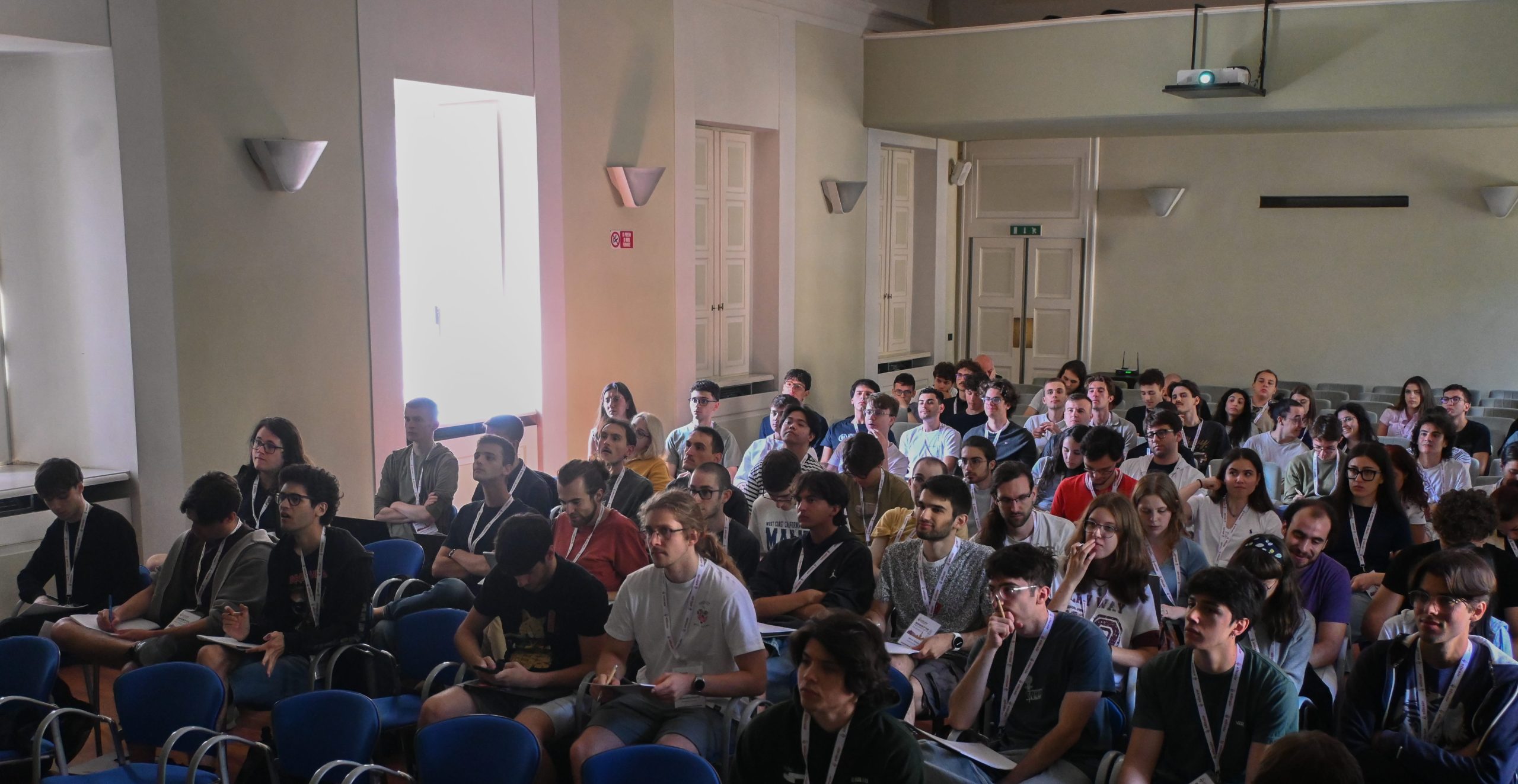
Studenti eccellenti del secondo e terzo anno di triennale e del primo anno di magistrale in Informatica e altre discipline STEM scoprono la ricerca di avanguardia nell’informatica. Ricercatori di punta coinvolgono i partecipanti nei loro ambiti di specializzazione tramite corsi brevi, seminari, discussioni e momenti di incontro informali.
La partecipazione è soggetta a una fase di selezione. La candidatura richiede l’invio di informazioni relative al proprio percorso accademico triennale o magistrale e di una breve descrizione dei principali risultati conseguiti finora.
Le candidature inviate entro il 10 luglio riceveranno una comunicazione sull’esito della selezione entro il 14 luglio. Le candidature ricevute dopo il 10 luglio saranno valutate su base continuativa, fino a esaurimento dei posti disponibili.
La partecipazione è gratis e vitto e alloggio saranno forniti a tutti i partecipanti.
Who should apply?
Outstanding second- and third-year undergraduate and first year Masters students in Informatics and other STEM disciplines.
What is the deadline for applications? When will I hear back?
Applicants submitting their applications by July 10 will receive notification of their status by July 14. Submissions received after July 10 will be evaluated on a rolling basis until all positions are filled.
What if I am available for a subset of the days of the school? Can I attend partially?
Unfortunately, no. Students are expected to commit for the entire duration of the school.
Where are classes held?
In Oropa, classes will be held in the Sala Convegni of the Sanctuary.
What kind of accommodations will there be?
Students will be hosted in the Monte Mucrone rooms within the Sanctuary’s hospitality facilities. Typical accommodations consists of a double room, with private bath and wi-fi.
Do I need to bring a laptop?
Yes. Courses may include coding exercises.
Which language is spoken at the school?
All instruction will be in English.
How many students will be attending?
Approximately 70
What does it mean “first week” of BOOST?
The second week of BOOST 2026 will take place in Bologna from August 30 to September 4. The two weeks are independent events with independent selection processes.



Ittay Eyal è professore associato presso la Facoltà di Ingegneria Elettrica e Informatica del Technion e direttore associato dell’Initiative for Cryptocurrencies and Contracts (IC3). Eyal ha conseguito il dottorato al Technion, seguito da una fellowship da postdoc presso la Cornell University. Ha ricevuto l’Alon Fellowship nel 2018 e il Krill Prize nel 2022. È coautore di “Majority Is Not Enough: Bitcoin Mining Is Vulnerable”, che ha ricevuto il Test-of-Time Award alla conferenza Financial Cryptography and Data Security. La sua ricerca si concentra sulle prestazioni e sulla sicurezza nei sistemi decentralizzati.

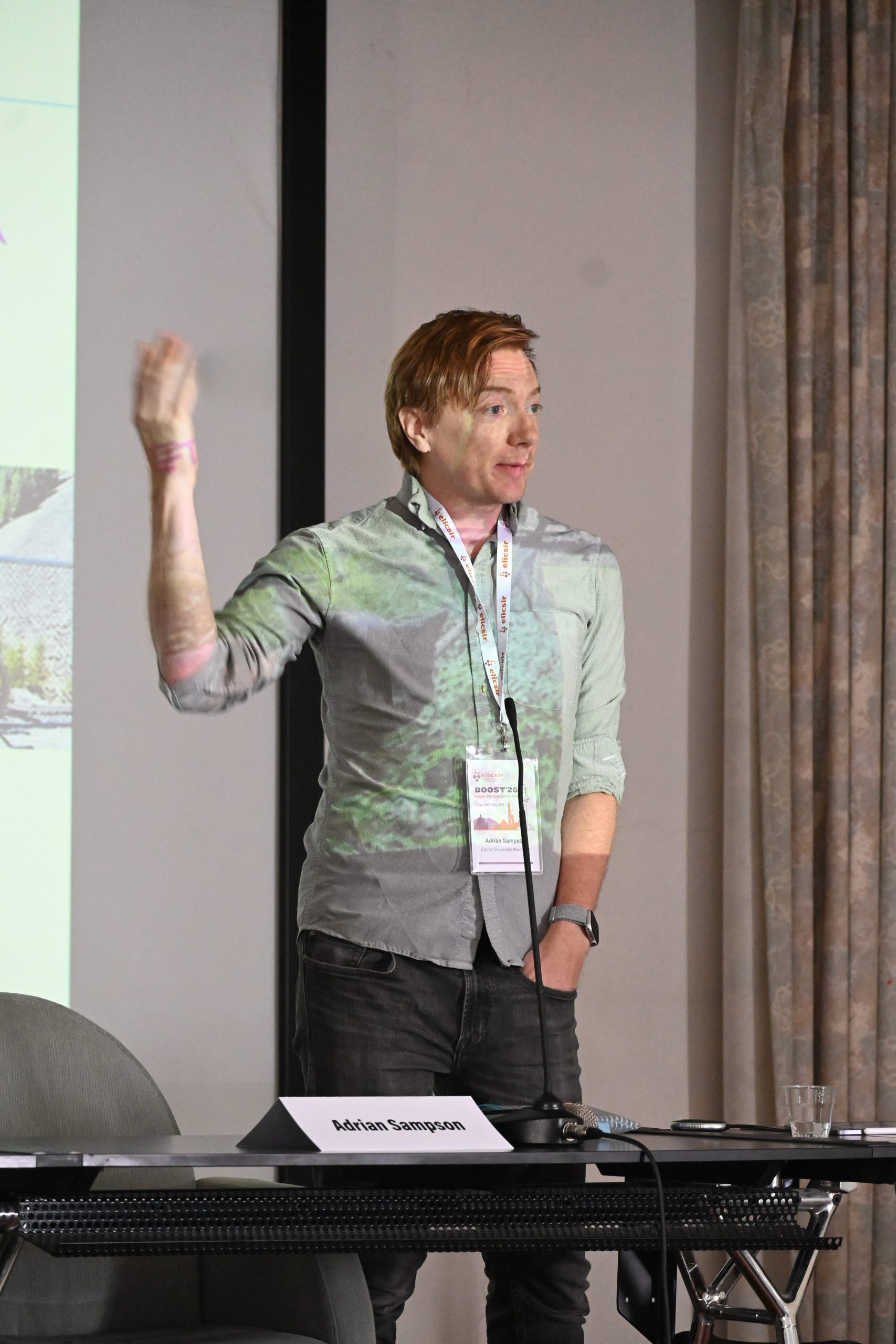
Adrian Sampson è professore associato presso il Dipartimento di Informatica della Cornell University. Si occupa di linguaggi di programmazione, architettura dei calcolatori e delle astrazioni che li separano. È particolarmente interessato a linguaggi e compilatori che rendano semplice per chiunque progettare e sfruttare acceleratori hardware specializzati. In passato si è occupato di approximate computing, l’idea secondo cui dovremmo progettare computer capaci di calcolare risposte “peggiori”.

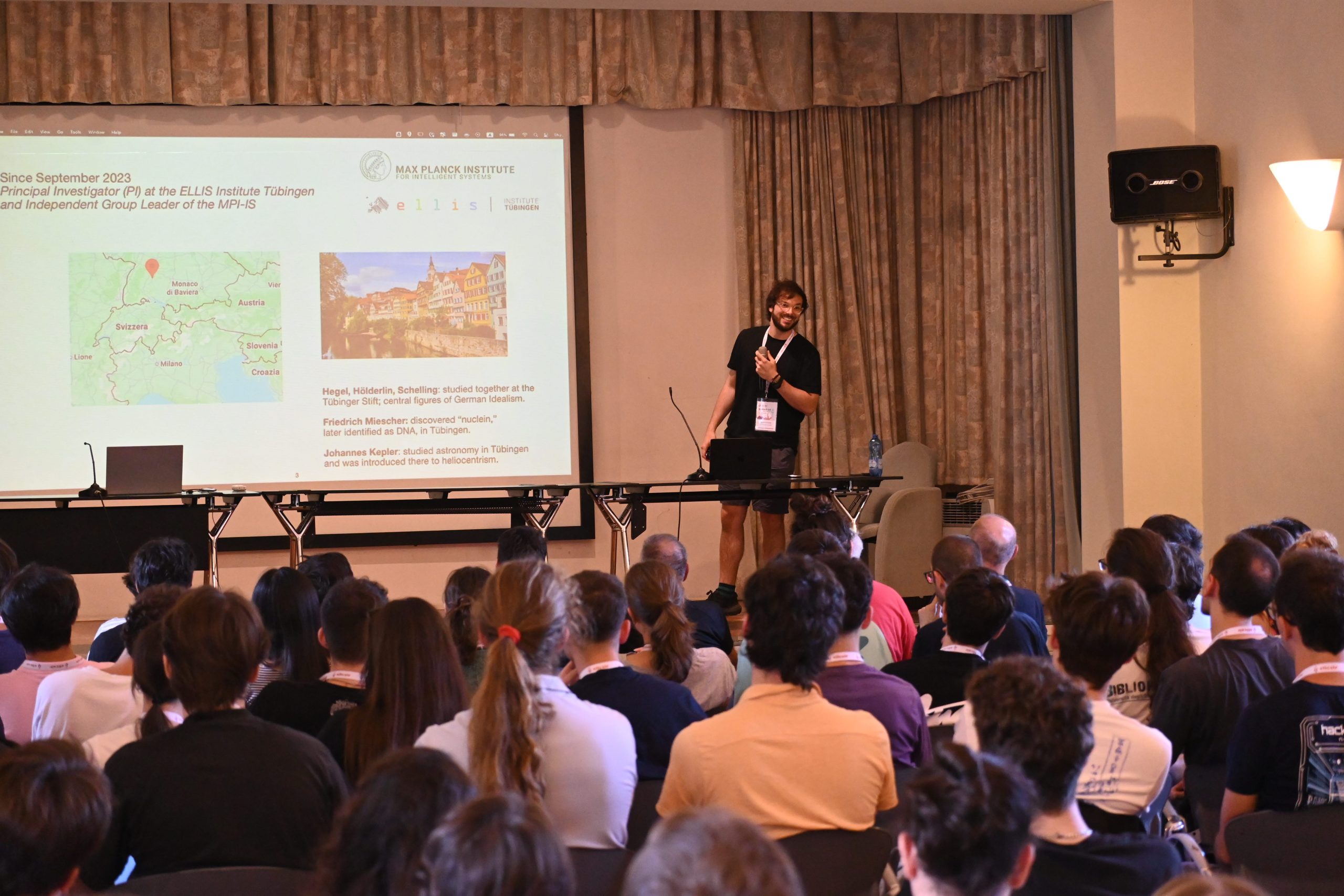
Antonio ha studiato Contro Engineering in Italia e in Svizzera. Ha conseguito un dottorato di ricerca (PhD) in Informatica presso l’ETH di Zurigo e ha svolto attività di ricerca presso Google DeepMind (Regno Unito), Meta (Stati Uniti), MILA (Canada), INRIA (Francia) e HILTI (Liechtenstein). Attualmente è Hector Endowed Fellow e Principal Investigator (PI) presso l’ELLIS Institute di Tubinga, oltre a essere Independent Group Leader presso il Max Planck Institute for Intelligent Systems, dove guida il gruppo Deep Models and Optimization. Ha ricevuto la Medaglia ETH per la migliore tesi di dottorato e la Schmidt Sciences AI2050 Early Career Fellowship.
Nella sua attività di ricerca, Antonio si impegna a migliorare l’efficienza delle tecnologie di deep learning, sviluppando nuove architetture e tecniche di addestramento fondate su solide basi teoriche. Il suo lavoro si concentra su due aree principali: la comprensione delle dinamiche di ottimizzazione su larga scala e la progettazione di architetture innovative e ottimizzatori avanzati in grado di gestire dati complessi. Un elemento centrale dei suoi studi è l’esplorazione di tecniche innovative per l’analisi e la decodifica di pattern nei dati sequenziali, con applicazioni in biologia, neuroscienze, elaborazione del linguaggio naturale e generazione musicale.
Decentralized blockchain systems are virtual machines available to anyone with Internet access. Moreover, they are permissioness distributed protocols, where any node can join to become one of the system operators. Their design utilizes tools from distributed computing, game theory, and cryptography. This combination gives rise to fundamental questions on how to achieve security and fairness without sacrificing performance; in turn, it raises open questions in each of the aforementioned fields. This short course will survey the theory and design of the different layers of blockchain systems and discuss some of the open questions.
Front-running is a subtle and persistent problem for blockchains. A blockchain is a stateful virtual machine executing instructions called transactions. Users earn rewards by publishing functional transactions essential to the system. Attackers observe these transactions and publish their own ahead of the users’, seizing the reward and eroding users’ incentive to publish functional transactions. Preventing front-running means enforcing causality: If an attacker receives transaction txA and then publishes transaction txB, then txA must be ordered before txB. However, this causality is only observed by the attacker. Practical systems order transactions by bid amount, so transactions willing to pay more get executed first, but this only results in a bidding war eroding users’ rewards. Though numerous ordering approaches have been proposed, none achieves causality, leaving users vulnerable to front-running.
This talk will present PRECEDE, a mechanism-design approach that enforces transaction causality by removing the economic incentive to front-run. PRECEDE orders transactions by a power-weighted randomized lottery, whose winning probability grows super-linearly in the bid. The user’s strategy of publishing a transaction with a deterring bid forms an equilibrium where the attacker refrains from competing. Moreover, PRECEDE prevents the prominent sandwich attack, which relies on front-running. PRECEDE can be directly deployed in existing blockchains with a simple change to their transaction ordering mechanism.
Compilers are the way that the computing ecosystem adapts to exploding diversity in both hardware and programming models. This short course is a hands-on introduction to the essential parts of a compiler “middle end,” which is where all the interesting work happens to represent, analyze, transform, and optimize programs. We will study program representations, local and global analyses, the data flow framework, and static single assignment form. The structure of the course will alternate between understanding algorithms and then implementing them to observe their effects on real code.
Hardware accelerators are the main route to scaling computational efficiency past the end of Moore’s law. Specialized mathematical functions form the heart of many application-specific accelerators. This category of hardware gains its efficiency from customizing numeric representations and elementary function implementations beyond what is possible in a general-purpose CPU. However, designing these mathematical circuits from scratch is a multifaceted and complex engineering problem. A math-to-hardware compiler is a hypothetical toolchain that translates an abstract mathematical expression over real numbers into an efficient hardware circuit. This talk will discuss some recent steps toward realizing math-to-hardware compilers, including optimizing “libm”-like functions and safely composing different specialized number formats.
Understanding how to adapt training hyperparameters (e.g., batch size, learning rate) as model size and data scale is crucial for developing future-generation AI systems. We study hyperparameter scaling laws for modern first-order optimizers through the lens of recent convergence bounds for methods based on the Linear Minimization Oracle (LMO), a framework that includes normalized SGD, signSGD (an Adam approximation), and Muon. Treating bounds in recent literature as proxies and minimizing them across different tuning regimes yield closed-form power-law schedules for learning rate, momentum, and batch size as functions of the iteration or token budget. Our analysis, holding model size fixed, recovers most insights and observations from the literature under a unified and principled perspective, with clear directions open for future research. Our results draw particular attention to the interaction between momentum and batch-size scaling, suggesting that optimal performance may be achieved with several scaling strategies.
Reference: https://arxiv.org/pdf/2603.15958
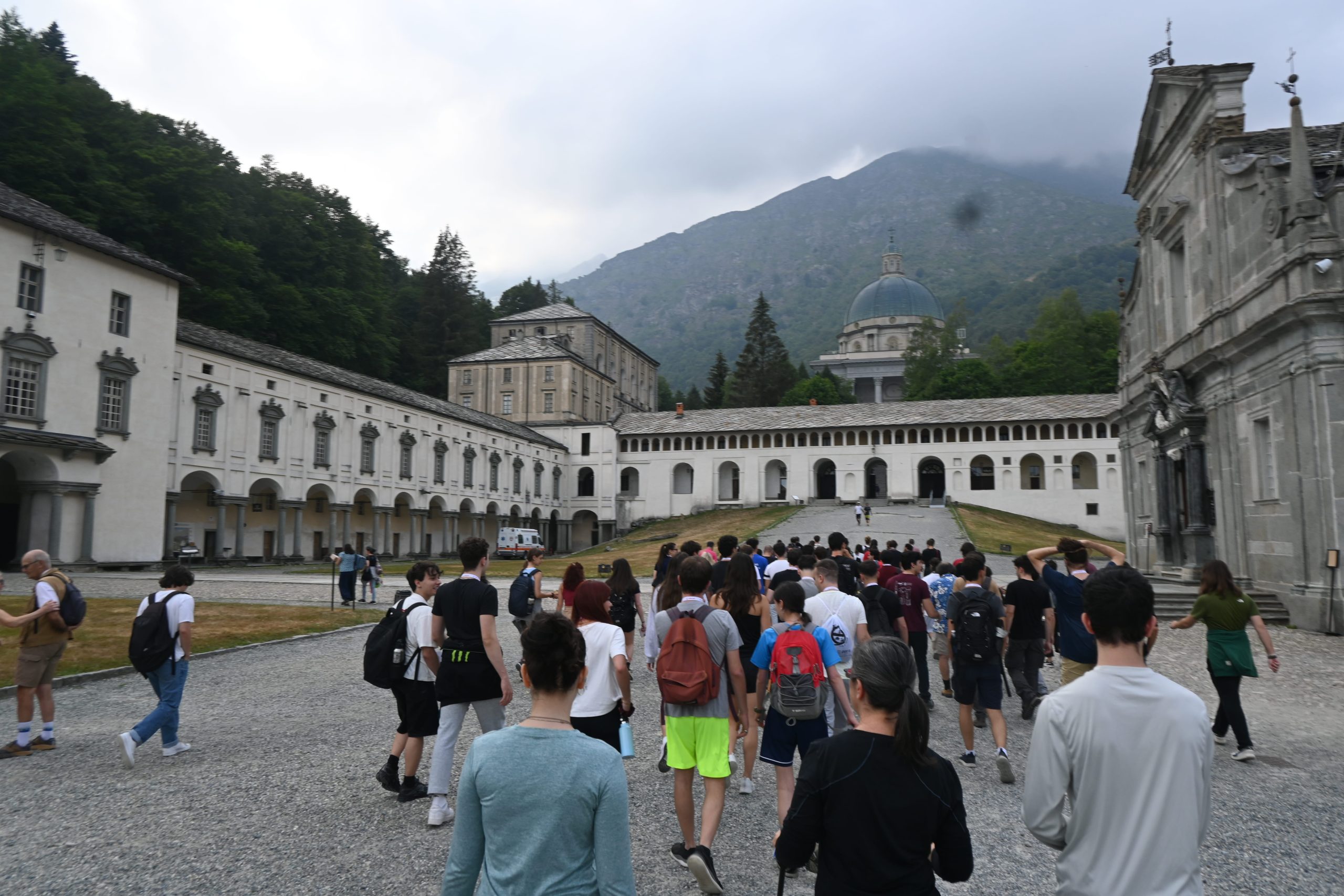
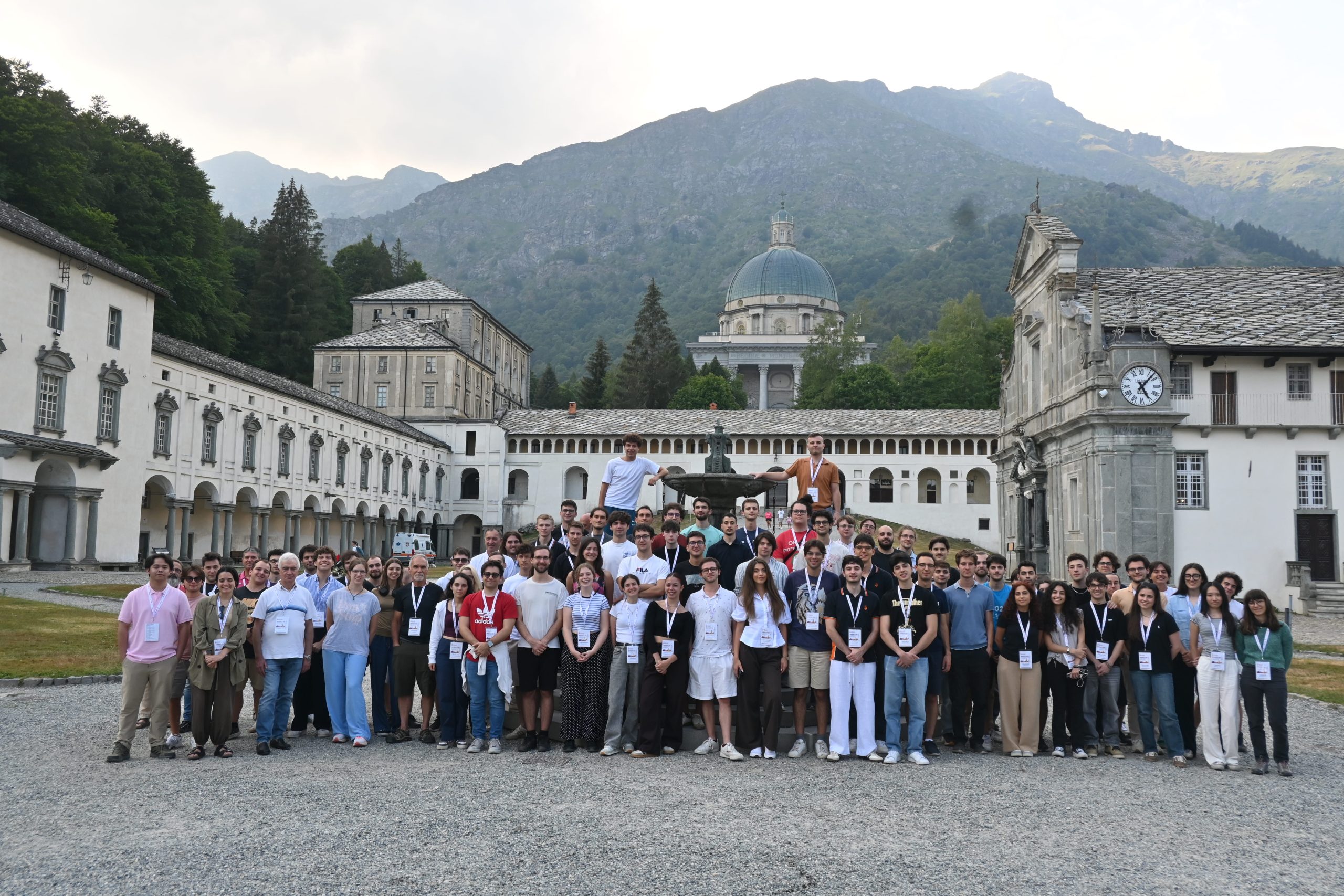
Santuario di Oropa, Oropa


© ELICSIR Foundation ETS 2026 - All right reserved
Questo sito utilizza cookie tecnici e di profilazione per migliorare la tua esperienza di navigazione. Continuando a navigare nel sito acconsenti all'uso dei cookie.