

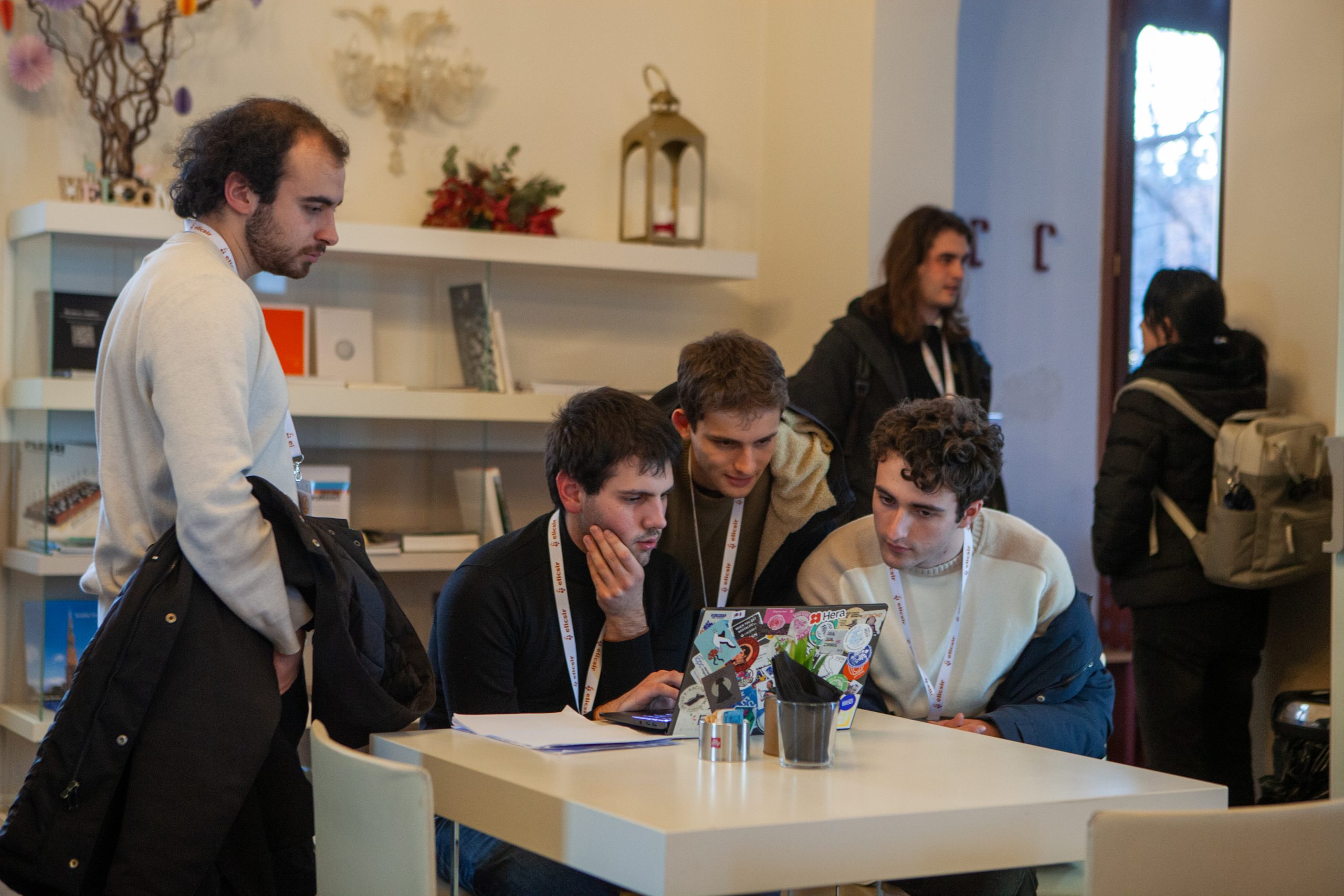
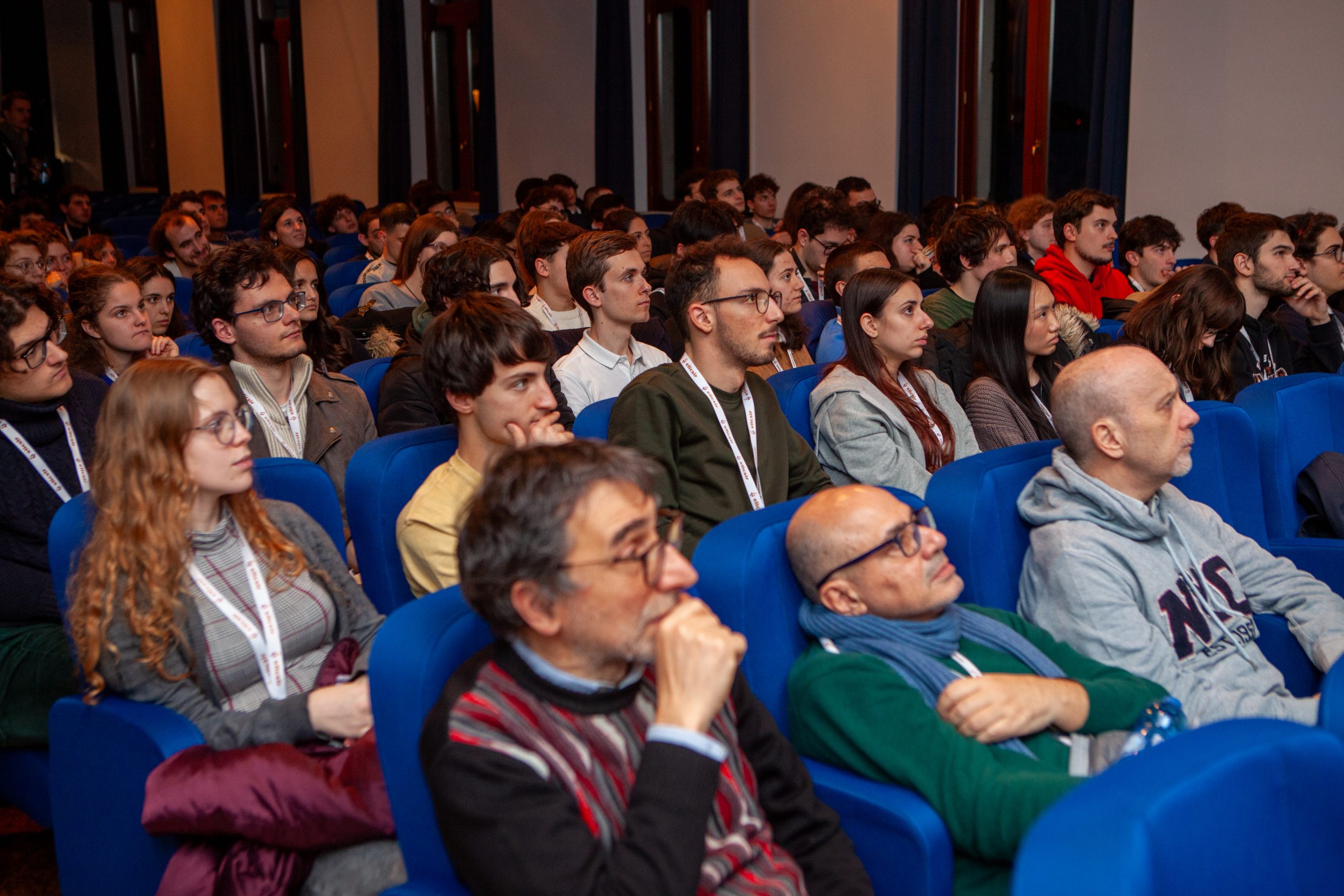
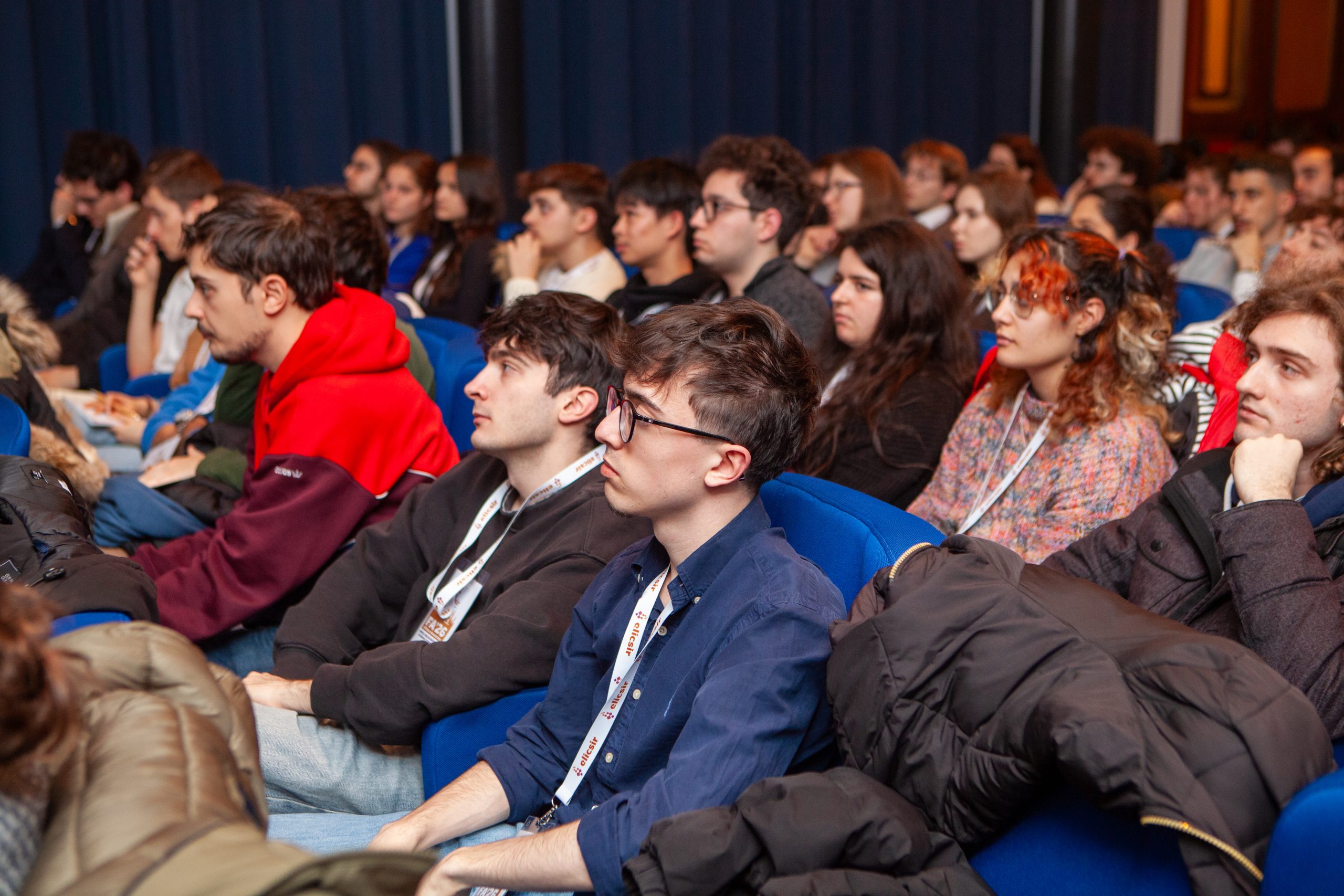
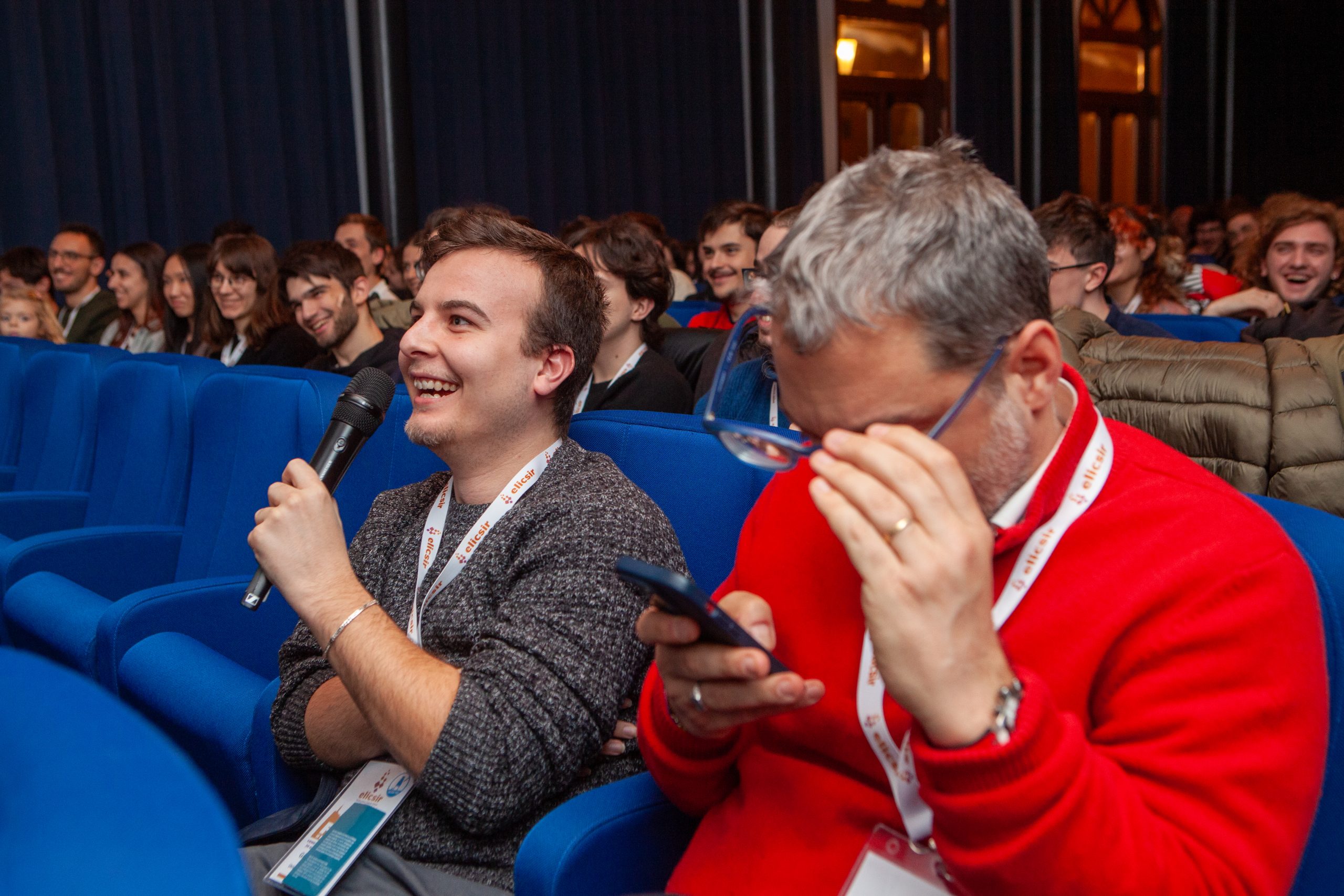
With The Future Foretold, a series of events aimed at undergraduate students in STEM disciplines, we want to showcase the often overlooked intellectual depth of computer science and the extraordinary career opportunities—both scientific and otherwise—that it offers.
The Future Foretold is an initiative created in collaboration with BiCi, which organized the first edition before passing the baton to the ELICSIR Foundation.
Imagine being a young physicist in the 1920s. Or a young biologist in the 1950s, at the dawn of molecular biology. As scientists, we live for moments like these: a new and fertile field of inquiry opens up, and the science ahead of us is beautiful, surprising, profound. Opportunities to make a lasting impact abound, and every day seems to herald exciting new developments. And the world is watching us.
What was true for quantum physics and for post-DNA molecular biology is happening right now in computer science, a discipline certainly not unfamiliar with disruptive revolutions. The computer, the internet, and the web have transformed the world far beyond the scientific and technological realm. But now a new computing revolution is emerging on the horizon, one whose impact, if anything, will be even greater.
In this event, aimed at undergraduate students in scientific and technological disciplines, we want to present the extraordinary career opportunities—scientific and otherwise—that computer science will offer in the years to come. We will do this primarily through the stories of several young protagonists: firsthand accounts illustrating what researchers at companies like Google and OpenAI do, how to found a successful startup, what it means to work with a Turing Award winner on a visionary project, and the incredible scientific challenges that lie ahead.
The program consists of a series of seminars—typically scientific in nature but also open to other areas of interest—and a series of “testimonials”: firsthand accounts from young researchers and entrepreneurs in the world of computer science. There will also be working meetings reserved for the orthogonalists.
Registration to this event is free and open exclusively to students who are currently enrolled in a three-year bachelor’s degree. There are a limited number of spots that will be assigned to the applicants on the basis of merit. Food and accommodation will be provided to all participants.
If you are interested in attending the Future Foretold / Futuro Annunciato (FA’26) you may apply by filling in this form.
All the applications received by midnight of January 10th 2026 will receive a response by January 17th. Students are allowed to apply after the deadline, and new applications will be considered until all the spots are filled.
If you have further questions, contact us at our email address.
ARRIVAL: you should plan your travel to ensure you arrive in time for the check-in procedure (see next point).
CHECK-IN: Upon arriving, you will have to check in. The check-in procedure will take place on the 30th of January 2026 between 4pm and 6pm at San Servolo.
ACCOMMODATION: Students will stay at San Servolo in double or triple rooms.
CONFERENCE START: Once you have successfully checked in and found your room, please head to the Auditorium by 6pm.



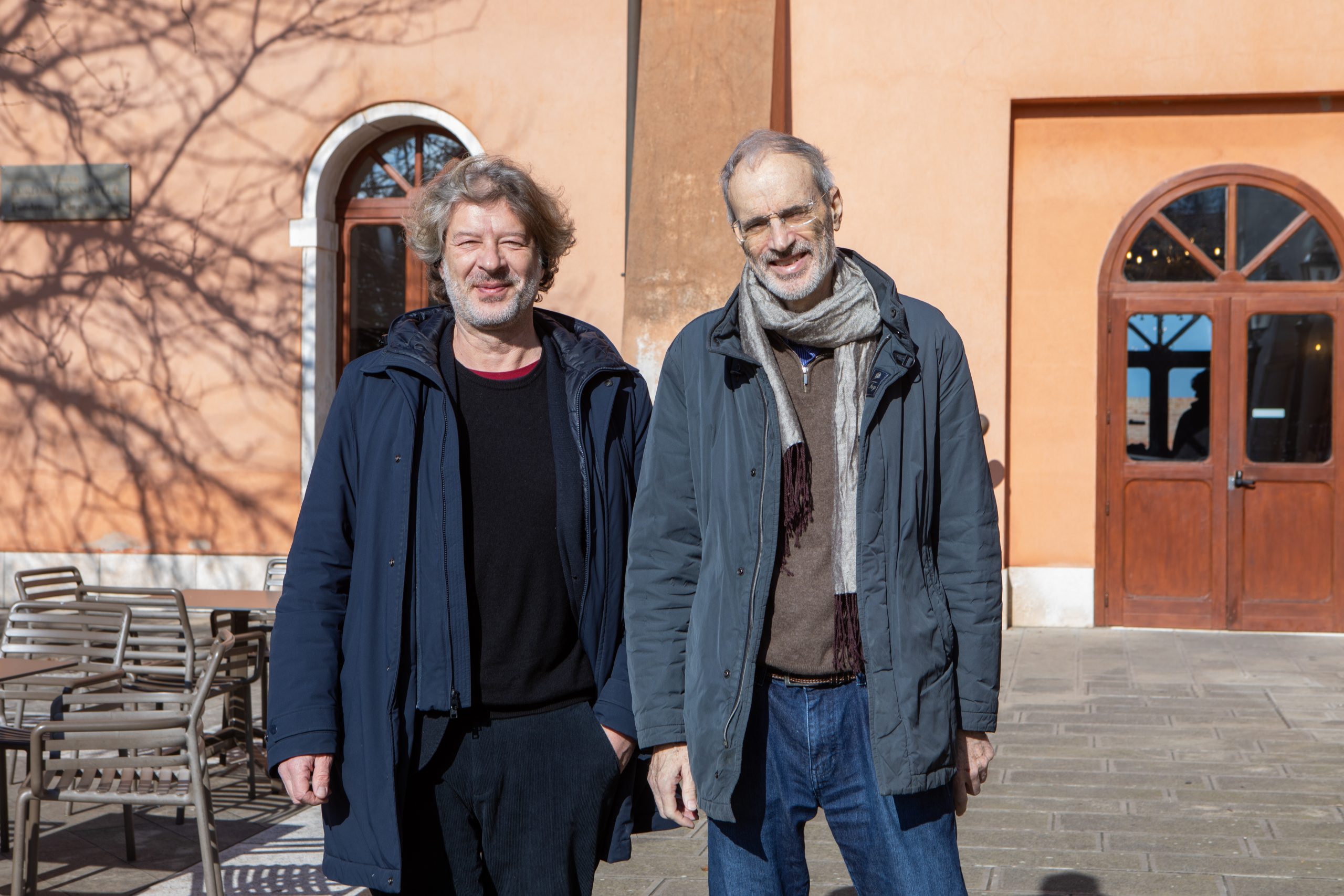
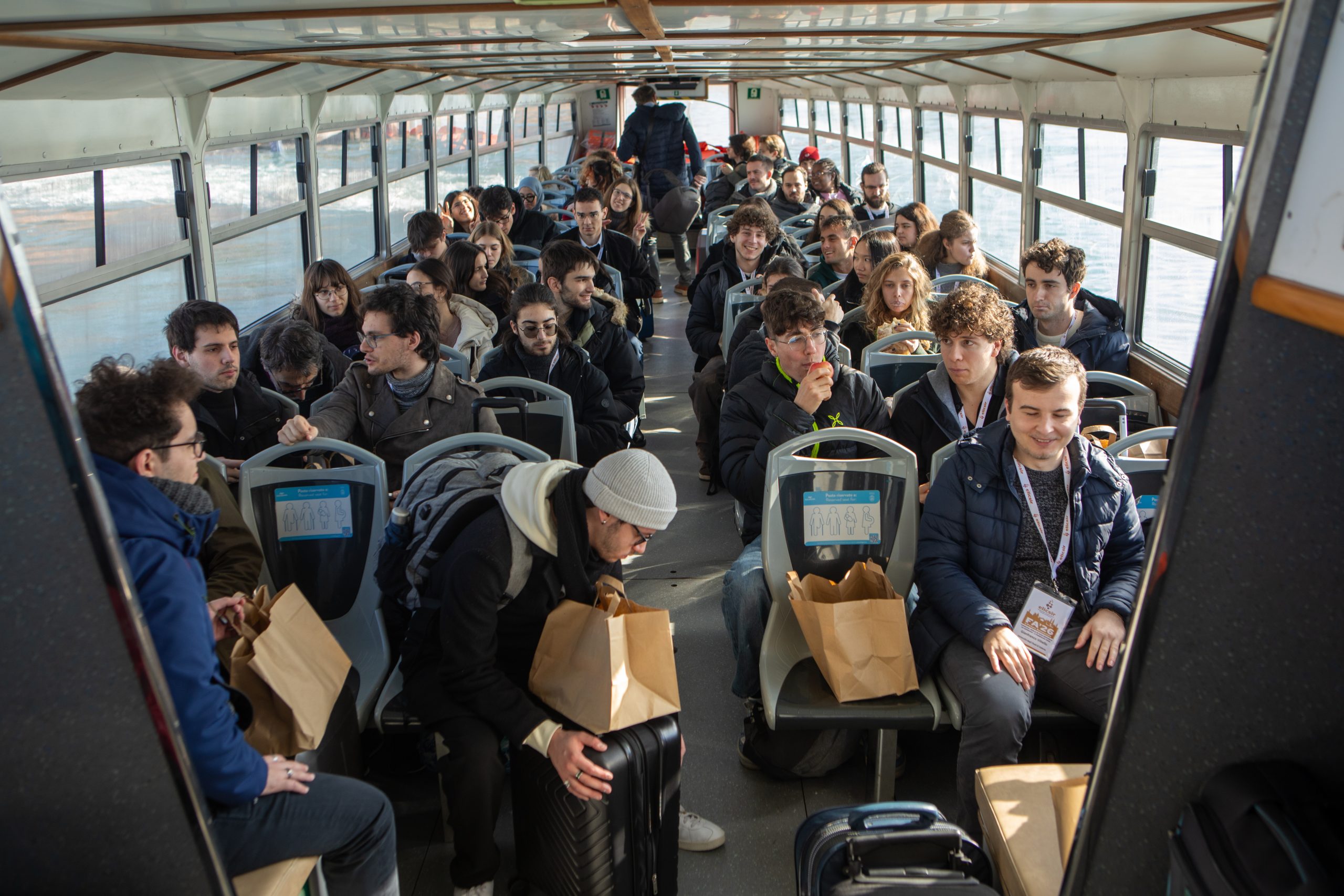


Ozalp is “Professore Alma Mater” at the University of Bologna where he was Professor of Computer Science from 1988 to 2025. Previously, he was an Associate Professor in the Computer Science Department at Cornell University. He earned his PhD in Computer Science in 1981 from the University of California, Berkeley. His extensions of virtual memory for AT&T’s Unix system, developed during his doctoral studies at Berkeley, became the foundation for a long series of “BSD Unix” distributions. He received the Sakrison Memorial Award in 1982 (along with Bill Joy), the UNIX International Recognition Award in 1989, and the USENIX Association Lifetime Achievement Award in 1993. In 2002, he was named an ACM Fellow. In 2007, he co-founded the IEEE International Conference on Self-Adaptive and Self-Organizing Systems (SASO). He has served on the editorial boards of ACM Transactions on Computer Systems, ACM Transactions on Autonomous and Adaptive Systems, and Springer Distributed Computing.
He is the President of ELICSIR and the Chair of the Board of the Orthogonal School.

Federico is a Research Scientist at Google DeepMind in London, where he works on Large Language Model (LLM) architectures, reasoning, large-scale training, and Transformer theory. He obtained his PhD from the University of Oxford under the supervision of Michael Bronstein. His doctoral thesis won the award for the Computer Science area from the Società Italiana di Intelligence.

Cristiano Giuffrida is a Full Professor in the Computer Science Department at the Vrije Universiteit Amsterdam. His research interests span across several aspects of computer systems, with a focus on systems security. He received a Ph.D. cum laude from the Vrije Universiteit Amsterdam in 2014. He was awarded the Roger Needham Award at EuroSys and the Dennis M. Ritchie Award at SOSP for the best PhD dissertation in Computer Systems in 2015 (Europe and worldwide). He was also awarded a VENI grant (the Dutch Equivalent of a NSF CAREER Award, PhD+3) in 2017, a VMware Early Career Faculty Award in 2020, a Jochen Liedtke Young Researcher Award at EuroSys in 2022, and the Dutch Prize for ICT research in 2023.

Francesco Locatello is a tenure-track assistant professor at the Institute of Science and Technology Austria (ISTA) and an AI resident at the Chan Zuckerberg Initiative. Before, he was a senior applied scientist at Amazon Web Services, leading the Causal Representation Learning team. He received his PhD from ETH Zürich co-advised by Gunnar Rätsch and Bernhard Schölkopf. His research received several awards, including the ICML 2019 Best Paper award, the Hector Foundation award for outstanding achievements in machine learning from the Heidelberg Academy of Science in 2023, and the Google Research Scholar Award in 2024.

Marco Mondelli earned both his Bachelor’s and Master’s degrees in Telecommunications Engineering in Pisa in 2010 and 2012, respectively, and during that period he was an Allievo Ordinario in the Engineering program at the Scuola Superiore Sant’Anna. In 2016, Marco obtained a PhD in Computer and Communication Sciences from EPFL. From 2017 to 2019, he was a Postdoctoral Researcher at Stanford University, and in 2018 he was a Research Fellow at the Simons Institute for the Theory of Computing. Marco has held a position at the Institute of Science and Technology Austria (ISTA) since 2019, first as a tenure-track Assistant Professor and, since 2025, as Professor. His research interests include data science, machine learning, high-dimensional statistics, coding theory, and information theory. Marco has received several awards, including the ISIT Student Paper Award in 2015, the STOC Best Paper Award in 2016, the EPFL Doctorate Award in 2018, the Simons–Berkeley Research Fellowship in 2018, the Lopez-Loreta Prize in 2019, the Information Theory Society Best Paper Award in 2021, and an ERC Starting Grant in 2024.

Alessandro is a Full Professor of Computer Science at the University of Sapienza in Rome. He earned his PhD in Computer Science from Cornell University. His research interests cover all aspects of algorithms, with a particular focus on randomized and distributed algorithms, and more recently, machine learning. He is the President of BICI, the Bertinoro International Center for Informatics. He has received international recognition for his research, including the ACM Danny Lewin Best Student Paper Award, the Dijkstra Prize, and faculty awards from IBM, Yahoo!, and Google, as well as two Google Focused Awards. He has served on the program committees of major conferences such as SODA, PODC, ICALP, WWW, and KDD, also taking on leadership roles. He is an associate editor of JCSS.
He is a member of the Board of Directors of ELICSIR and the Board of the Orthogonal School.

Geppino is a Full Professor of Computer Science at the University of Padua. After earning his PhD in Computer Science from the University of Pisa, he held a postdoctoral position at the International Computer Science Institute in Berkeley. At the University of Padua, he has served as a member of the Academic Senate and as the President of the Computer Engineering Degree Programs. His research focuses on algorithms for big data analysis and high-performance computing. He is the author or co-author of over one hundred publications in international journals and conferences. He has received three Best Paper Awards (IPDPS 2004, ICCS 2004, Euro-Par 2023) and has served on the editorial board of the Journal of Discrete Algorithms. He has also been a member of the program committees (including chair or vice chair roles) for numerous leading conferences in the scientific community, such as SPAA, ICALP, IPDPS, and WWW.
At ELICSIR, he is a mentor for the Orthogonal School.

Simona is Full Professor of Computer Science at the University of Palermo. Her research interests focus on the design of algorithms for the analysis and knowledge extraction from large amounts of data, in various application contexts. She has served as Principal Investigator for many, also big-size, national and international research projects. She is Associate Editor for Journal of Big Data and serves on several editorial boards, including those of BMC Bioinformatics and Journal of Computational Biology. She is CEO and co-founder of an innovative startup working on Artificial Intelligence for the support to Precision Medicine. Among the other awards, in 2023 she won the ITWIIN “Capacity Building” Prize, granted by the Italian Association of Women Inventors and Innovators “for demonstrating remarkable ability to coordinate a research group and an academic spin-off, capable of achieving significant scientific results and highly useful applications in the current historical and social context.”
At ELICSIR, she is a mentor for the Orthogonal School.

Alessandro Verri has been a Full Professor of Computer Science at the University of Genoa since 2000. After obtaining his degree and PhD in Physics at the University of Genoa, he held several postdoctoral, visiting scientist, and visiting professor positions at MIT, where he taught Networks for Learning with Tomaso Poggio for three years. He was a postdoctoral researcher at ICSI in Berkeley and a visiting scholar at INRIA IRISA in Rennes and at Heriot-Watt University in Edinburgh.
His research interests focus on the theoretical and applied aspects of computation, with particular emphasis on computer vision and machine learning. His publications have received approximately 16,000 citations, and his h-index is 48. He has supervised 20 PhD students and has coordinated and participated in numerous international and national research projects, both foundational and oriented toward technology transfer.
He has taught courses on topics such as Introduction to Programming, Computer Architectures, Information Theory and Inference, and Analysis and Design of Algorithms at the undergraduate level in Computer Science, as well as Computer Vision, Digital Signal Processing, Machine Learning, and Reinforcement Learning at the graduate level in Computer Science. He served as Head of Department from 2007 to 2012 and as Coordinator of the Computer Science degree programs from 2017 to 2022 and again starting in 2025.

Silvia Zuffi is a Senior Research Scientist at the IMATI (Institute of Applied Mathematics and Information Technologies) of the Italian National Research Council (CNR) in Milan. She holds a PhD in Computer Science from Brown University, where her thesis focused on “Shape models of the human body for distributed inference” under the supervision of Prof. Michael J. Black. Her academic background also includes a Master of Science in Computer Science from Brown University and a degree in Electronic Engineering from the University of Bologna. She held also a postdoctoral position at the Perceiving Systems group of the Max Planck Institute for Intelligent Systems (Tübingen, Germany).
Her research lies at the intersection of computer vision, graphics, and machine learning, with a special emphasis on pose and shape estimation for humans and animals from images and video data. Over her career, she has contributed to realistic modeling of articulated bodies, and the development of generative models for animal 3D shape and pose reconstruction. Her earlier work includes research in color imaging, multispectral imaging, and visual perception.
Silvia’s ongoing projects address challenges in reconstructing 3D shape and pose of animals from “in the wild” imagery, contributing tools for applications in ecology, conservation, animal wellness and visual computing.
Contemporary cryptography is an essential tool for enhancing cybersecurity of systems and has transitioned from heuristic obfuscation techniques to algorithms with rigorous mathematical foundations. In this talk, I will delve into the RSA algorithm for asymmetric, or public-key, cryptography and show how it can satisfy the requirements of modern cryptography which include confidentiality, authentication and non-repudiation, making it suitable for implementing digital signatures. I will then present problems related to the management of secret keys and discuss techniques for secret sharing and key escrow. Finally, I will discuss digital certificates, certification and Public-Key Infrastructures (PKI) which are essential for public-key cryptography but are often ignored.
I will describe my career path, starting from my doctoral studies up to my current role at Google DeepMind. I will begin by discussing my theoretical research on Graph Neural Networks and how it led to a three-month internship at Microsoft Research in Amsterdam, where I worked on protein folding. I will then talk about my two internships at DeepMind, focused respectively on reasoning and machine learning safety, and conclude with an overview of my current experience as a Research Scientist and the open challenges in industry. Finally, I will share my perspective on the advantages and disadvantages of pursuing a PhD in machine learning.
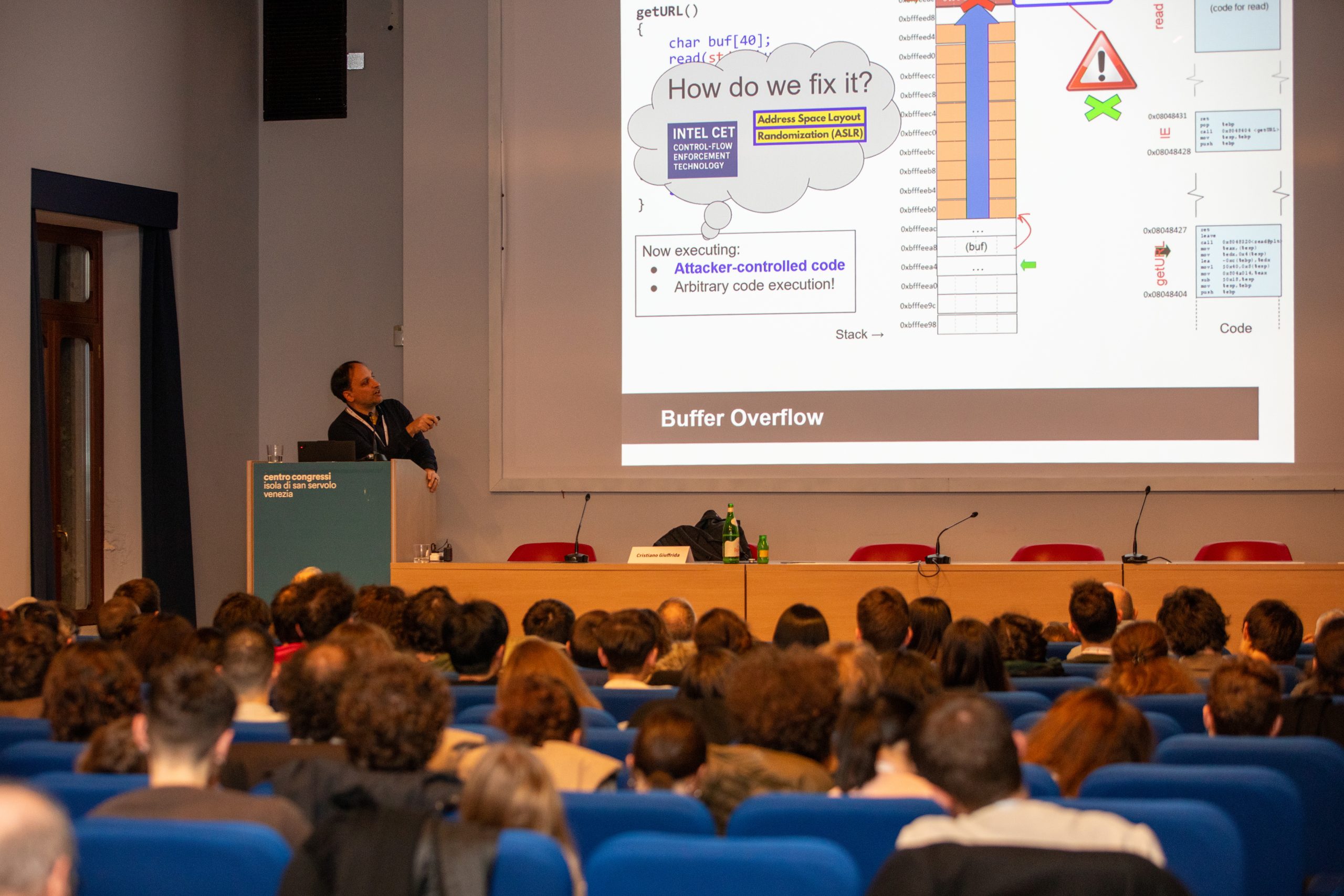
For decades, the security community has operated under a simple assumption: if we could just eliminate software bugs, we could eliminate most security problems. But what happens when attackers no longer need bugs at all? In this talk, we explore a new and unsettling reality in which even “perfect” software can be compromised. Modern attacks increasingly exploit the physical world beneath our abstractions, that is, subtle side channels created by performance optimizations such as memory deduplication and hardware flaws like the Rowhammer DRAM vulnerability. These techniques allow attackers to bypass traditional defenses entirely and break systems that, on paper, should be “bug-free.”
Through real-world examples, we will uncover why the foundations of computer security are shifting and why understanding hardware-level vulnerabilities is becoming essential for the next generation of security engineers and researchers.
In this presentation, I will look back on my path from the Venetian countriside to causality research. I will discuss how opportunity shaped my research interests, from my studies in Information Engineering, to a random encounter that led to my master studies at ETH Zürich. How indecision led me to a PhD, after which I was sure my path would be in industry research only to move back to the university as an assistant professor. Alongside this trajectory, I will discuss the research questions that have motivated me, from algorithms to big data and machine learning, all the way to leading a causality research group.
Siamo al centro di una rivoluzione nell’informatica, in cui i dati rappresentano la risorsa più preziosa. Sfruttare questo numero crescente di dati richiede di affrontare complessi problemi di inferenza e, attraverso la mia carriera, ho lavorato per sviluppare soluzioni basate su principi matematici. Questi problemi di inferenza abbracciano diversi campi e sorgono in una varietà di applicazioni provenienti dall’ingegneria e dalle scienze naturali. In particolare, parlerò di comunicazioni wireless e machine learning. Nelle comunicazioni wireless, dato un canale di trasmissione, l’obiettivo è inviare informazioni codificate come un messaggio, ottimizzando al contempo determinate metriche, come complessità, affidabilità, latenza, throughput o larghezza di banda. Nel machine learning, dato un modello per le osservazioni, l’obiettivo è capire quanti dati trasmettono informazione sufficiente per risolvere un dato problema e quali sono i modi ottimali per utilizzare tali dati. Sia la visione generale che gli specifici strumenti tecnici che uso si ispirano alla teoria dell’informazione, che porta all’indagine delle seguenti domande fondamentali: qual è la quantità minima di informazioni necessaria per risolvere il problema di inferenza? Data questa quantità minima di informazioni, è possibile progettare un algoritmo a bassa complessità? Quali sono i trade-off tra i parametri in gioco (ad esempio, dimensionalità del problema, dimensione del campione di dati, complessità)? Concluderò discutendo come questi strumenti teorici si applicano a problemi pratici in biologia computazionale.
The era of randomized algorithms with mathematical guarantees of correctness began around the mid-1970s, with results such as the Solovay–Strassen and Miller–Rabin primality tests, and the first rigorously analyzed hashing and fingerprinting techniques. Since then, the use of randomness has become a central algorithmic tool, opening up a rich line of research that remains fundamental to this day. To illustrate the topic, in this seminar we will examine in fairly detailed terms a couple of elegant probabilistic algorithms for fundamental algorithmic problems.
La crescita vertiginosa del volume e della velocità dei flussi di dati generati in numerosi contesti (dalla fisica delle alte energie, alle reti sociali, fino al trading online) impone modelli di calcolo e tecniche algoritmiche capaci di elaborare dinamicamente tali flussi, senza poterli prima memorizzare per intero per poi applicare le metodologie offline tradizionali. Questo seminario introduce il modello di streaming, un paradigma computazionale pensato per l’elaborazione di dati ad alta velocità. Partiremo da alcuni semplici esempi, al fine di evidenziare le differenze tra il progetto di algoritmi offline e quelli in streaming, per poi presentare le principali varianti del modello e alcune tecniche fondamentali — tra cui reservoir sampling e sketching — che consentono di eseguire elaborazioni efficienti utilizzando una quantità di memoria indipendente dalla dimensione dello stream. Concluderemo illustrando qualche applicazione delle tecniche di base a problemi centrali nell’analisi dei dati.
Precision Medicine represents one of the greatest promises in the medical field. Its goal is to design and tailor treatments according to the needs and characteristics of patients, who can be differentiated into various categories. Although significant progress has been made in this direction in oncology, many other diseases (e.g., chronic, rare, etc.) are still far from being addressed using this approach. One of the main reasons is that physicians often lack adequate tools to support their decision-making processes, especially in more complex cases. Enabling them to automatically access a larger amount of well-organized and structured information, from which new and useful knowledge can be extracted to support their decisions, represents an important contribution toward making Precision Medicine applicable on a broader scale. This would make it possible, for example, to avoid unnecessary diagnostic tests as well as the risk of severe side effects, while improving both therapy adherence and patients’ quality and length of life, with significant savings for the entire healthcare system. Software tools based on innovative technologies—such as Big Data and Artificial Intelligence—can play a key role in this scenario and contribute to the development of high-impact products within the relevant market.
La Computer Vision ha vissuto e sta ancora vivendo un periodo di grandi cambiamenti. Passando brevemente in rassegna vecchi problemi e nuove soluzioni difenderò un punto di vista critico che riconosce la qualità e l’importanza di quanto sviluppato a oggi e, allo stesso tempo, riflette su quanto ancora resti da fare e da capire in uno dei campi che ha giocato un ruolo fondamentale nello sviluppo delle tecnologie di machine learning che oggi vanno per la maggiore.
Understanding animals from visual data is a complex challenge with important applications in ecology, veterinary science, robotics, and computer graphics. In this talk, I will present our work toward automatic 3D reconstruction, focusing on the development of realistic and controllable 3D animal models. I will show how these models can be used to infer the 3D pose and shape of animals from images and video, ultimately providing a foundation for the development of automated methods for behaviour analysis.
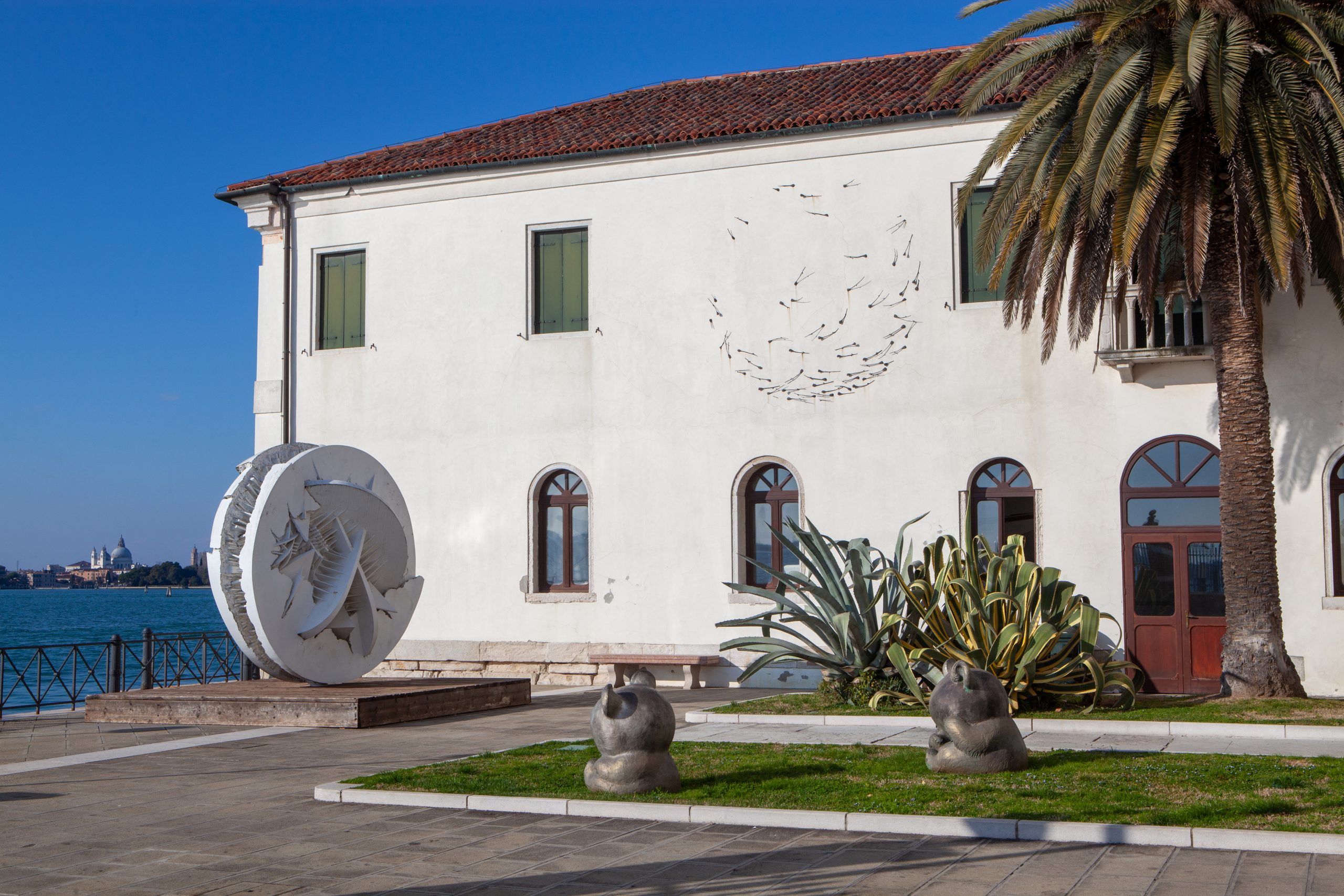
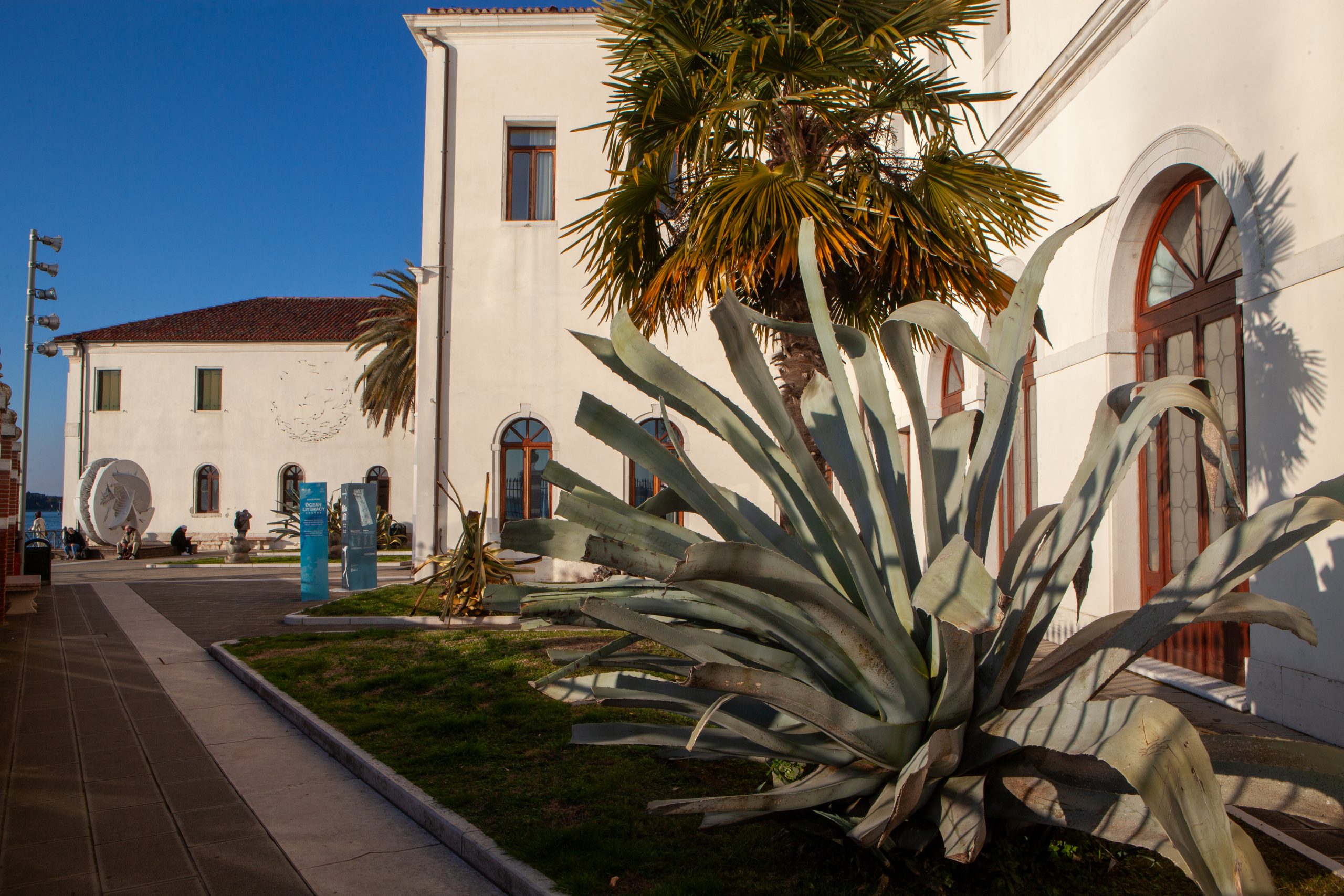
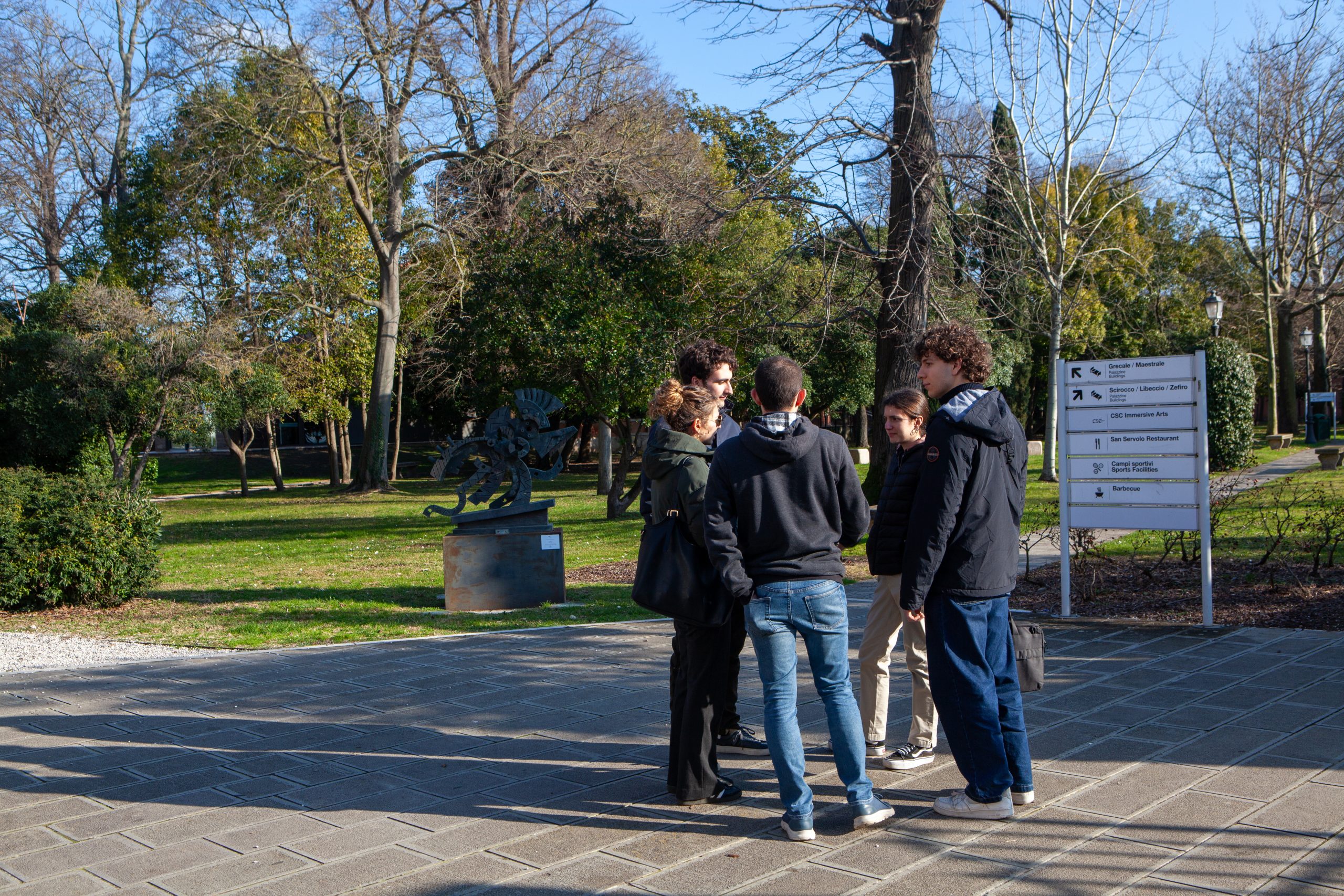
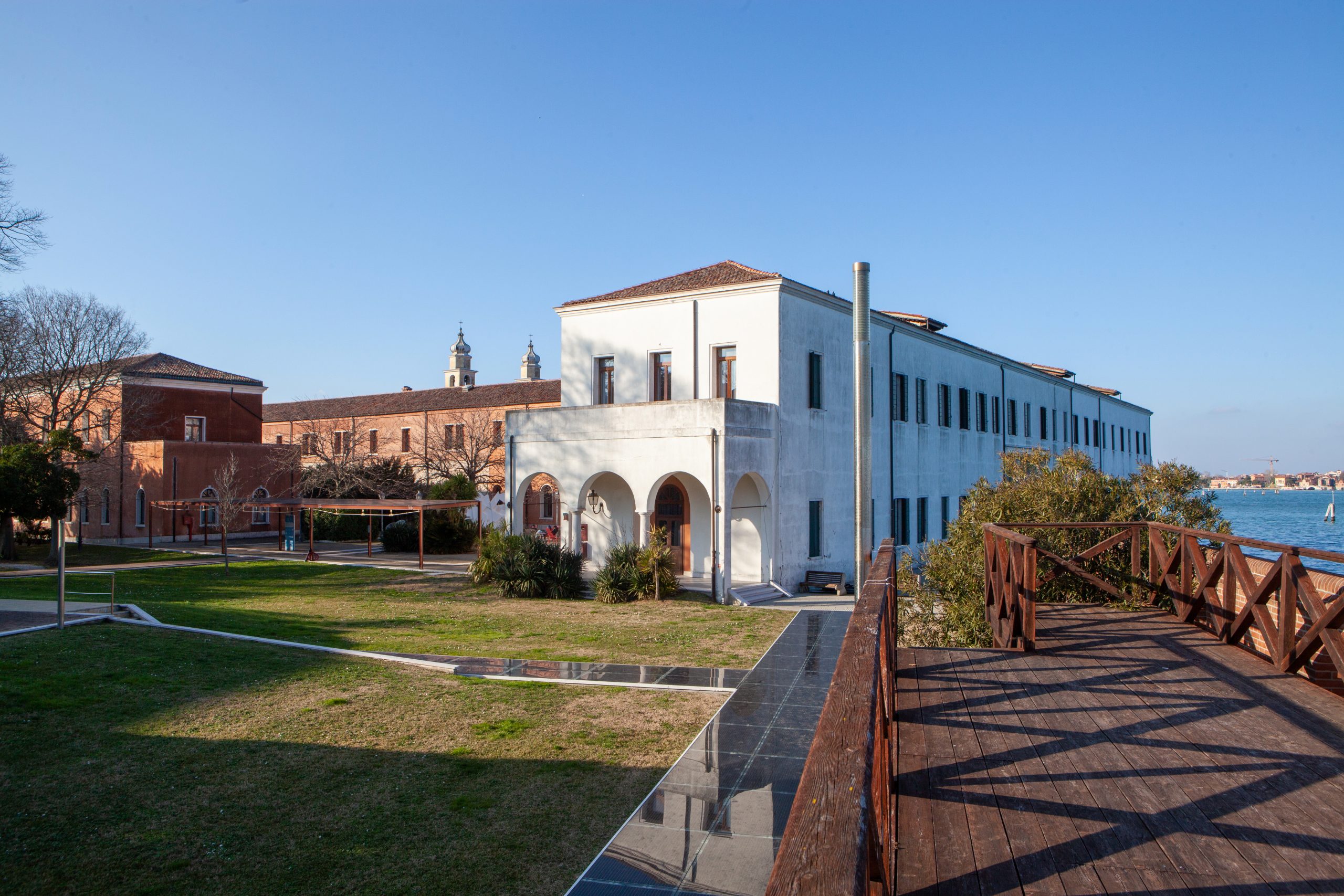
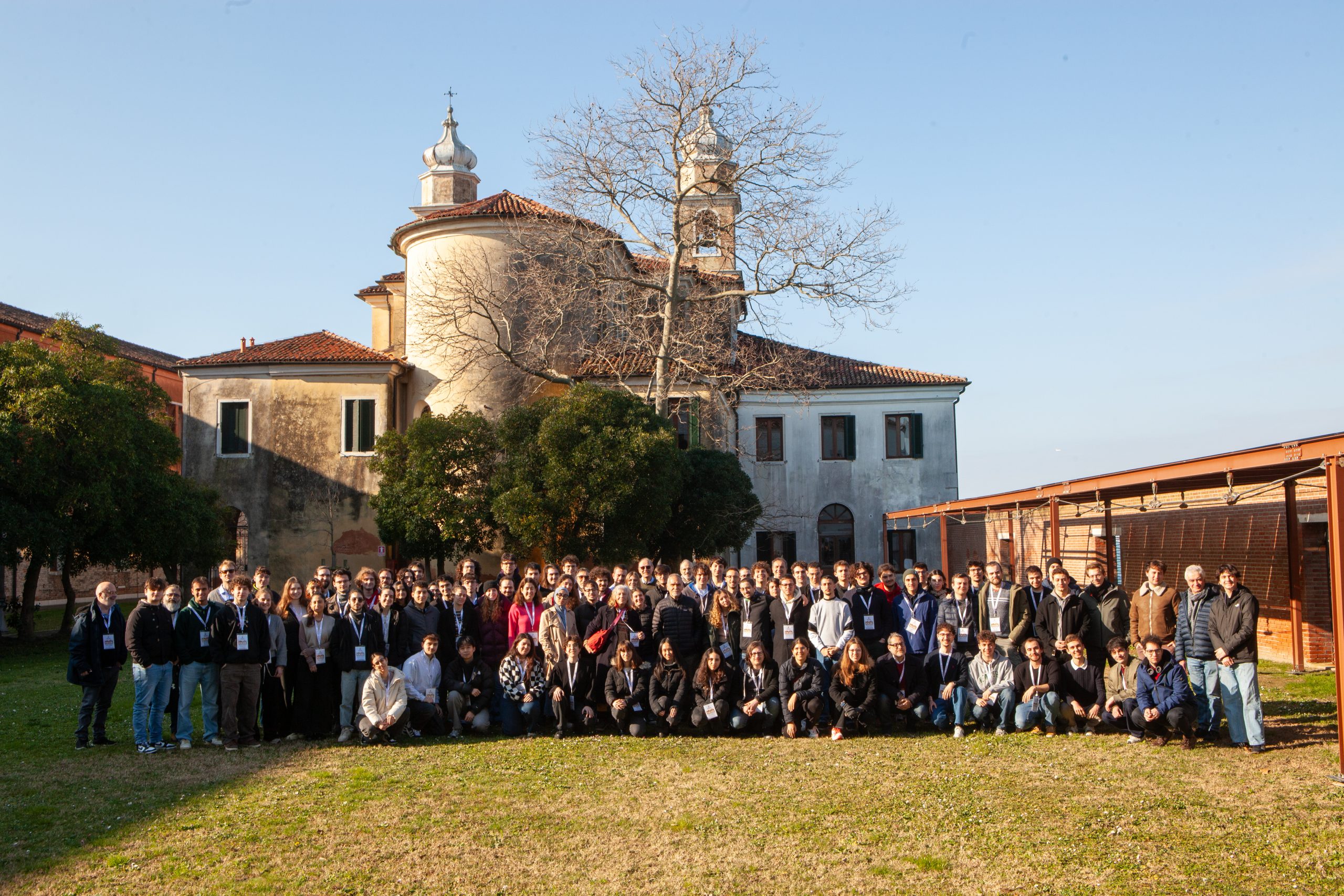
Isola di San Servolo, Venezia
L’evento si terrà nella serena e pittoresca isola di San Servolo, nel cuore di Venezia, presso il Campus VIU.
L’isola è completamente adibita a centro congressi, con servizi di foresteria e ristorazione.
Gli studenti saranno alloggiati in stanze doppie o triple dotate di bagno indipendente.
L’Isola di San Servolo si trova a 10 minuti di barca da Piazza San Marco, Venezia.
Il vaporetto n°20 parte dal molo B di San Zaccaria, lungo la riva adiacente a Piazza San Marco. Il molo B si trova di fronte all’Hotel Londra Palace.
Inoltre, la linea 10 collega Zattere a San Servolo due volte al giorno, alle 8:14 e alle 8:34, su richiesta. Si prega di contattare il personale a bordo se si utilizza la linea 10.
Controlla eventuali aggiornamenti e consulta gli orari correnti per altre rotte sul sito ACTV.
Per orari e percorsi dei vaporetti vi consigliamo la app CheBateo?
La principale stazione ferroviaria di Venezia è Venezia Santa Lucia.
Da lì, per raggiungere la fermata del vaporetto San Zaccaria, prendi la Linea n°4.1 o la Linea n°5.1 e scendi alla fermata San Zaccaria.
Ci sono diversi servizi che collegano l’aeroporto a Venezia:
Taxi Acqueo (diretto) e Taxi (via Stazione Ferroviaria Venezia Santa Lucia)
Puoi prendere un taxi acqueo privato direttamente fino alla tua destinazione finale (una scelta costosa, che dall’aeroporto a San Servolo costa circa €130,00). In alternativa, puoi prendere un taxi terrestre fino alla stazione ferroviaria Venezia Santa Lucia.
Servizio di vaporetto Alilaguna LINEA BLU (via centro città)
Questa compagnia offre un servizio che collega l’aeroporto a Murano, il Lido, l’Arsenale, con una fermata finale vicino a Piazza San Marco.
Autobus ATVO (dall’Aeroporto Marco Polo di Venezia a Venezia Piazzale Roma)
Questi autobus navetta blu e gialli collegano l’aeroporto a Piazzale Roma (vicino alla stazione Venezia Santa Lucia) e partono davanti all’ingresso della sala partenze. I biglietti possono essere acquistati presso i distributori automatici situati nella sala bagagli, nella sala arrivi e all’esterno dell’aeroporto.


The ELICSIR Foundation was founded in October 2023 as an Italian non-profit “Ente del Terzo Settore (ETS)” and is registered with the Registro Unico Nazionale del Terzo Settore (RUNTS) as 04154681201.
© ELICSIR Foundation ETS 2026 - All right reserved
Questo sito utilizza cookie tecnici e di profilazione per migliorare la tua esperienza di navigazione. Continuando a navigare nel sito acconsenti all'uso dei cookie.

